Scalability: The Architecture of Success (and Survival)
In the high-stakes world of software, we often obsess over Performance—the millisecond-perfect response time of a single user session. But in a global digital economy, performance is merely the baseline. Scalability is the true finish line.
Performance asks: “How fast can we go?” Scalability asks: “How much weight can we carry before the foundation cracks?” If your system is lightning-fast for one user but collapses under 10,000, your performance doesn’t matter. You don’t have a product; you have a high-speed prototype. Performance and scalability are not engineering luxuries-they are business fundamentals that determine whether your platform capitalizes on sudden growth or collapses under the weight of its own success.
The Scalability Illusion
A dangerous myth suggests that scalability is a “credit card problem”—that you can simply throw more cloud infrastructure at a bottleneck to make it disappear.
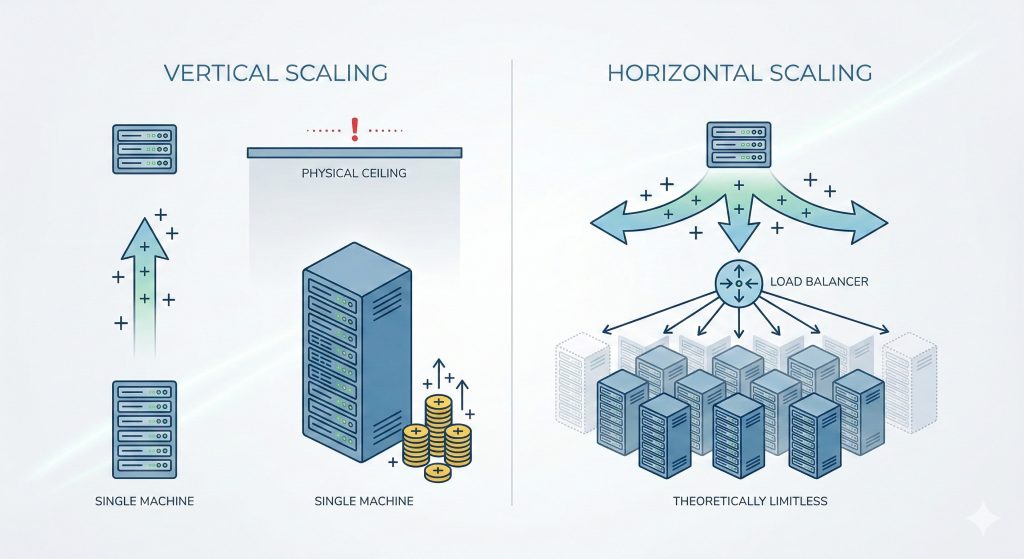
True scalability is an architectural property, not an infrastructure expense. If your database relies on a single global lock or your application depends on a shared “state” in memory, adding 100 servers won’t help. In fact, it often makes the problem worse by creating more contention for that single bottleneck. This is the fundamental choice in design:
- Vertical Scaling (Scaling Up): Buying a bigger, more powerful engine. It’s simple but expensive and eventually hits a physical ceiling.
- Horizontal Scaling (Scaling Out): Adding more engines to the fleet. This is theoretically limitless, provided your software is designed to be distributed.
Protecting Opportunity and Managing Risk
Systems rarely fail because a minor feature is missing; they fail because they were not designed to endure. In an era of viral social media and instant global access, traffic spikes are no longer “outlier” events-they are the goal. When a platform crashes during a peak moment, the damage ripples far beyond the IT department:
- Direct Revenue Loss: Every minute of downtime during a launch is a lost sale.
- Brand Devaluation: Customer trust is hard to earn and incredibly easy to lose during a “Service Unavailable” error.
- Technical Debt: The cost of emergency “hotfixes” during an outage is significantly higher than building for scale upfront.
Scalability is risk management. It ensures that your biggest marketing win doesn’t become your biggest operational disaster.
Systemic Design over Patching
Retrofitting scalability into a tightly coupled, “monolithic” system is a recipe for technical debt and fragile workarounds. High-performing systems are intentional from the start. To achieve true elasticity, architects must focus on:
- Clear Service Boundaries: Decoupled services (and process orchestrators like Camunda 7.21.0) prevent local issues from becoming cascading system failures.
- Stateless Design: By keeping services stateless, you allow the cloud to spin up or down instances instantly based on demand.
- Caching as a Core Strategy: Moving data closer to the user via edge caching and reverse proxies reduces the “trip” to the database.
- Asynchronous Communication: Not every action needs an instant response. Using message queues allows the system to buffer high-pressure loads.
- Observability: You cannot optimize what you cannot see. Metrics and tracing are the “eyes” of a scalable system.
The Cultural and Executive Impact
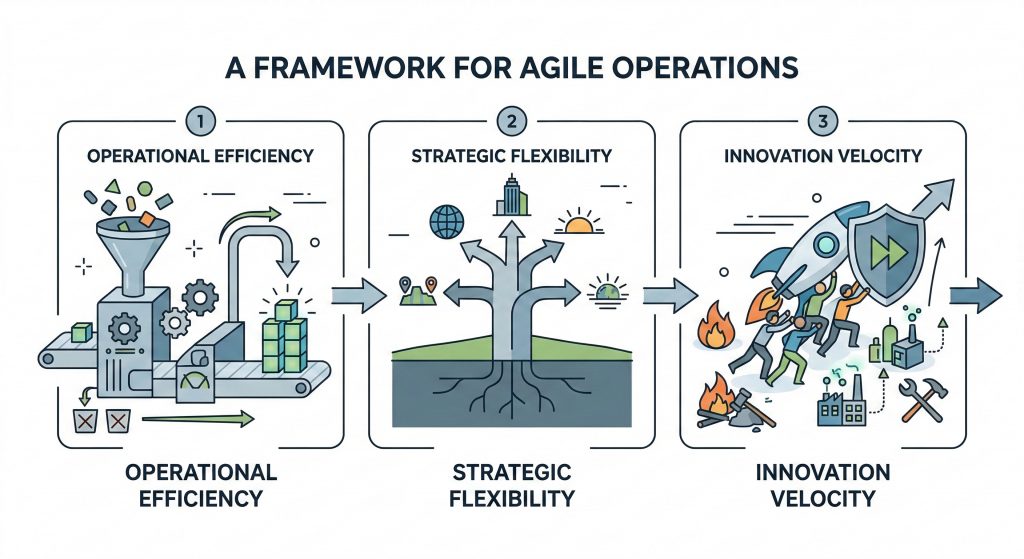
Technology alone does not create scalable systems; culture does. Organizations that treat performance as a first-class citizen define non-functional requirements early and align their architecture with long-term growth expectations. From an executive standpoint, this investment influences:
- Operational Efficiency: Lower infrastructure waste through better resource utilization.
- Strategic Flexibility: The ability to pivot or expand into new markets without rebuilding the foundation.
- Innovation Velocity: Resilient systems reduce the “fear of breaking things,” allowing teams to spend less time firefighting and more time building.
Final Thought
Users do not see your architecture diagrams, and they do not care about your technology stack. They experience three things: speed, reliability, and consistency. Performance is the promise you make to your users; scalability is the architecture that allows you to keep that promise as you grow. Together, they define whether your digital platform merely functions-or truly dominates the market.